




In the evolving landscape of digital assets, sophisticated threats continue to emerge, targeting unsuspecting users and their funds. Two such prevalent attack vectors are Address Poisoning and Dusting Attacks. While distinct in their methodology, both exploit the public nature of blockchains to deceive or deanonymize users.
This document provides an overview of these attacks, outlines industry-wide best practices for defense, and details the robust security framework Liminal Custody has implemented to protect our clients. Understanding these threats is the first step toward a more secure digital asset management experience, representing a shared responsibility between custodians and users.

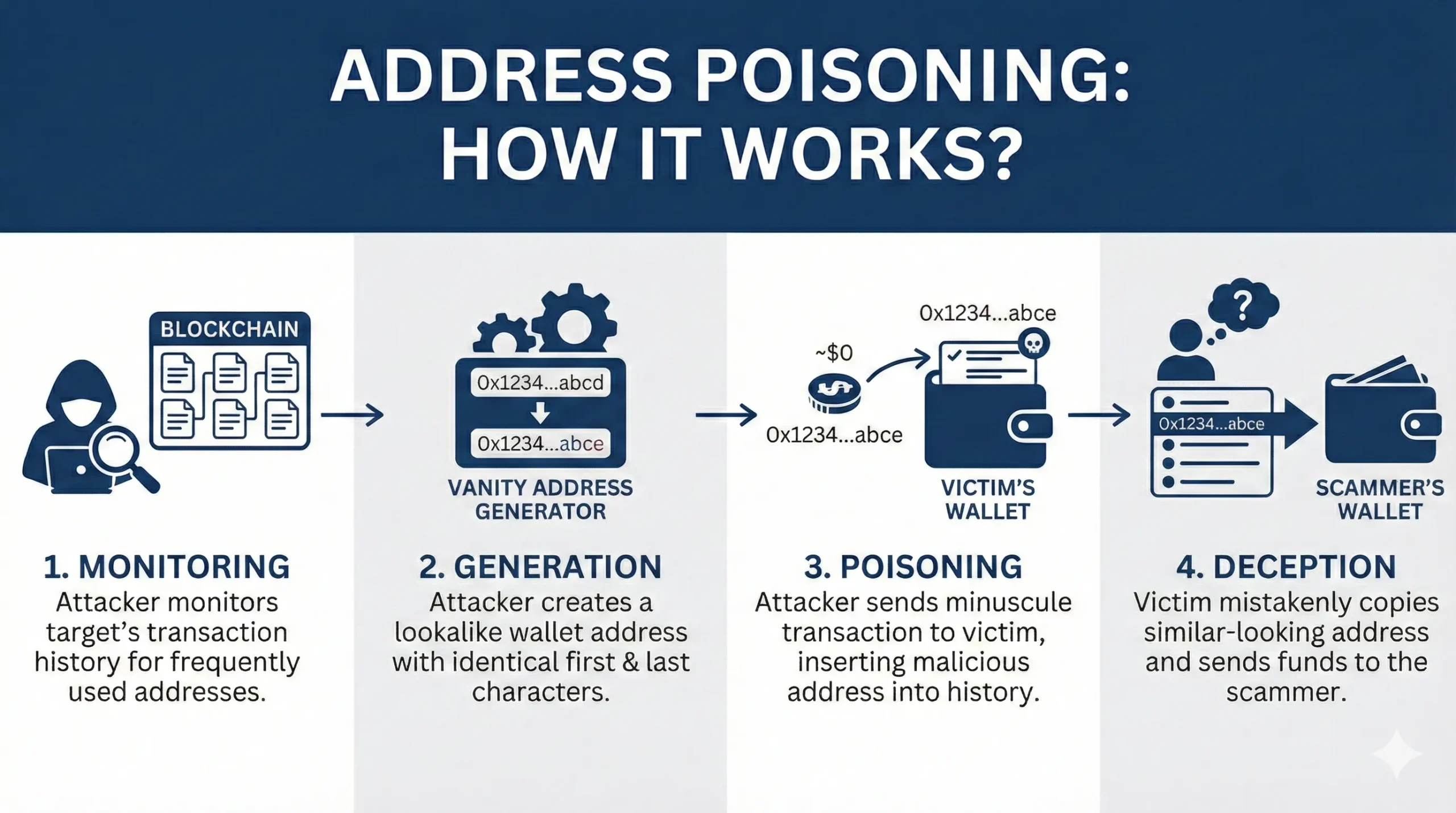
An Address Poisoning attack is a deceptive scam where an attacker tricks a user into sending funds to a malicious address that looks nearly identical to a legitimate one they have transacted with before. The core of the attack lies in exploiting user convenience and the common practice of copying addresses from transaction histories.
How It Works
The attack unfolds in a few calculated steps:
According to a 2024 Chainalysis report, one such address poisoning campaign generated over 82,000 lookalike addresses, highlighting the scale and low cost of these attacks for scammers [1].
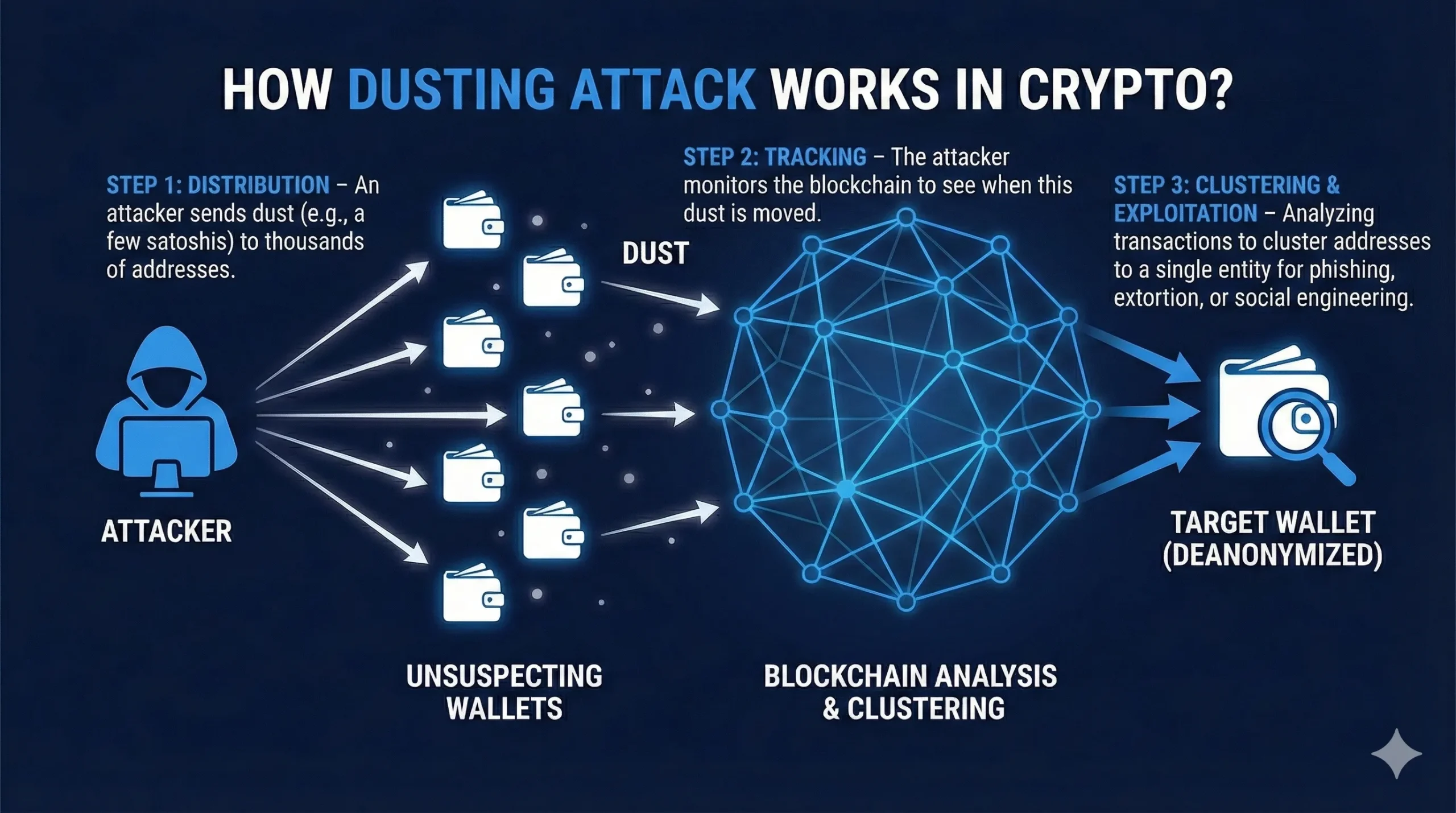
A Dusting Attack is a form of blockchain analysis aimed at compromising a user’s privacy. Attackers send tiny, almost unnoticeable amounts of cryptocurrency, known as “dust,” to a large number of wallet addresses. The primary goal is not to steal funds directly but to link different addresses to a single entity, thereby deanonymizing the wallet’s owner.
How It Works
The ultimate goal of a dusting attack is to trace the ownership of funds:
It is crucial to differentiate these attacks: Address Poisoning is a direct theft attempt through deception, while Dusting is a reconnaissance mission to breach privacy for future exploitation.

At Liminal Custody, we employ a multi-layered security strategy to provide institutional-grade protection against these and other emerging threats. Our controls are designed to be both proactive and responsive, ensuring the integrity of your asset.
Liminal supports the following security and compliance features to implement the above security framework:
While Liminal provides a secure environment, user diligence is a critical component of defense. The following table summarizes best practices to protect against these attacks:
| Attack Type | Key Prevention Strategies |
|---|---|
| Address Poisoning |
|
| Dusting Attacks |
|
Securing digital assets is a collaborative effort. Liminal Custody is committed to providing a fortified platform with institutional-grade controls that protect against sophisticated attacks. By combining our advanced security framework with vigilant user practices, we can create a formidable defense, ensuring your assets remain secure in an ever-changing digital world.
Chainalysis. (2024). Anatomy of an Address Poisoning Scam. https://www.chainalysis.com/blog/address-poisoning-scam/
Gemini. (n.d.). Crypto Dust and Dusting Attacks Explained. https://www.gemini.com/cryptopedia/crypto-dusting-attack-bitcoin
BitGo. (2025). Dust Attacks in Crypto: What They Are and How to Stay Protected. https://www.bitgo.com/resources/blog/dust-attacks-in-crypto/
Ledger. (2025). Protecting yourself from a dusting attack. https://support.ledger.com/article/protecting-yourself-from-dusting-attack
Hilal Ahmad Lone is the Chief Information Security Officer (CISO) at Liminal Custody Solutions. With over 17 years of experience, he has served as CISO at Razorpay, Dream11, and Traveloka. A multiple-time CISO of the Year awardee, he is a recognized speaker on AI and cybersecurity at AWS re:Inforce, GitHub Galaxy, DSCI Fintech, and more.