

Building Technology for the Migration of Money:
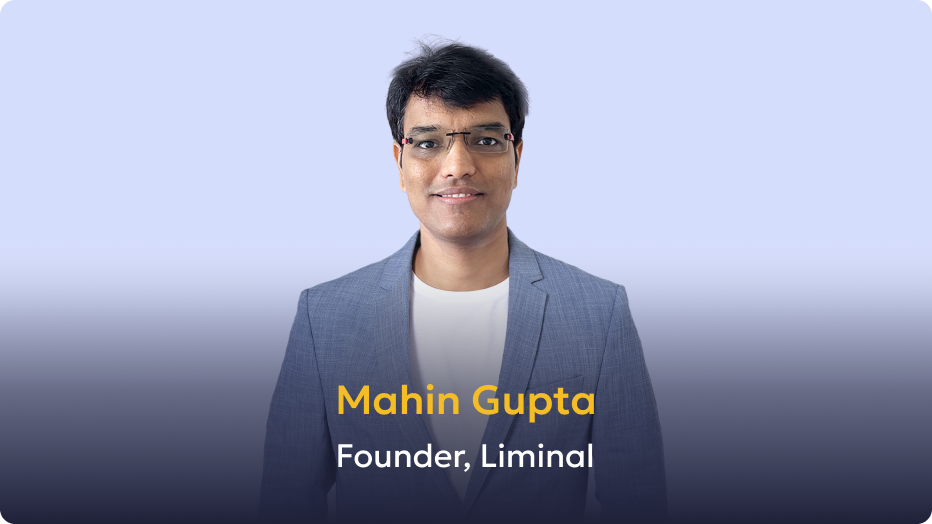
Liminal's Five-Year Reflection — Mahin Gupta, Founder
Anniversaries often invite celebration, Infrastructure journeys invite reflection.
Over the past five years, we have been building digital asset custody systems that today process more than $100 billion in transaction value across global blockchain networks, with millions of transactions handled daily. These numbers matter not as milestones, but as signals that institutions are beginning to trust programmable financial infrastructure.
The digital asset industry is still early. Narratives often move faster than systems, and markets reward visibility before reliability. Our work has always focused on the latter. Institutions do not move because something is trending. They move when they trust that the infrastructure will hold through volatility, regulatory change and operational pressure.
That conviction began with a technical question about how value behaves in distributed systems. Long before blockchain entered mainstream conversation, programming was simply a way to understand how complex networks respond under stress and how small design decisions shape real-world outcomes.
During my early years running a software services company, I experienced financial friction that many technology businesses quietly endure. Cross-border payments were expensive. Settlement cycles stretched from three days to sometimes more than a week. Fees could reach five to ten percent. These inefficiencies were accepted as structural realities rather than engineering problems waiting to be solved.
Around this time, we were asked to work on a project related to Bitcoin. My first reaction was not excitement about price or speculation. It was technical disbelief. The idea that a digital unit of value could not be duplicated challenged deeply held assumptions about financial systems. For an engineer, that realisation is difficult to ignore. It suggested that financial infrastructure itself could become programmable.
Building Access Before Ecosystems Exist
In 2012, I began working on a platform that allowed users in India to buy and sell Bitcoin. Awareness was minimal, liquidity fragmented and regulatory clarity limited. From the beginning, compliance became part of product design rather than an afterthought.
This effort later evolved into ZebPay, which I co-founded with Sandeep Goenka and Saurabh Agrawal. Product decisions focused on reducing friction, simplifying onboarding, improving settlement speeds and expanding accessibility. By 2017, we had reached strong market leadership. Growth also brought exposure to policy shocks that reshaped the industry’s trajectory. Eventually, ownership transitions led to our exit.
Even after stepping away, it was difficult to ignore how unfinished the underlying infrastructure still felt. Exchanges had evolved quickly, but institutional challenges around custody governance, liquidity management and wallet workflows remained complex.
Returning To The Problem That Remained
Across markets, treasury teams were still manually managing wallet balances, coordinating transaction approvals and reconciling fragmented liquidity. Many custody solutions were secure but workflow-light. Institutions often needed large engineering teams to build essential operational layers.
We started again with a clear thesis. If digital assets were to support institutional scale, infrastructure had to become simpler, more transparent and more reliable.
Our early work focused on reducing operational dependency on manual processes. As institutional participation increased, we invested more deeply in research and development. Security in programmable finance cannot rely solely on legacy access models.
This led to exploration of distributed authorisation frameworks. Multi-party computation allowed transaction signing to evolve into a governance process involving multiple stakeholders. Research teams, including efforts led by Dr. Sharmila Deva Selvi, helped develop protocols that combine hardware security environments with distributed signing logic. Innovations such as dynamic shard refresh during approval cycles help reduce risk concentration, while continuous optimisation improves fee efficiency for stablecoin transfers as volumes grow.
Building In Markets That Demand Discipline
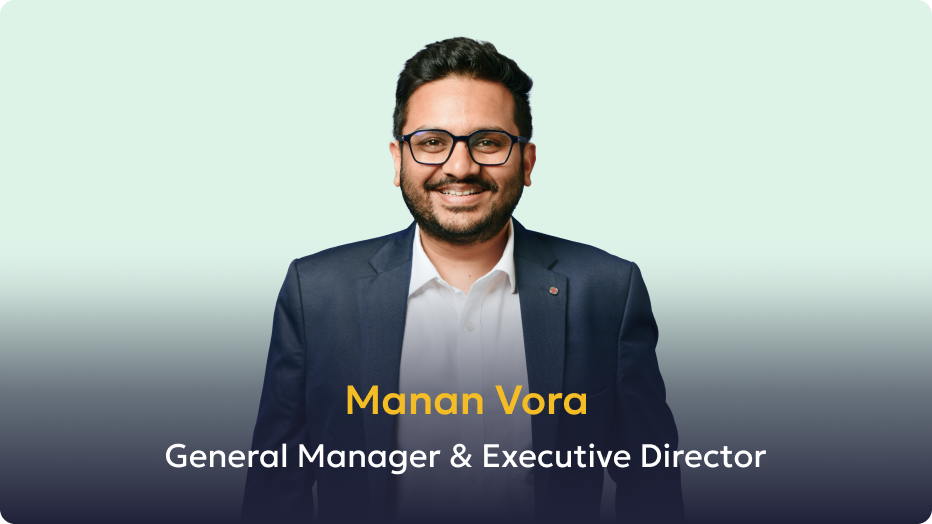
As we began building again, I reached out to people I had interacted with earlier who shared a similar curiosity about technology and conviction in programmable finance. Colleagues such as Manan Vora, Ankit D and Dhruvil joined during these formative stages, helping shape institutional conversations even before the product had fully taken form.
Teams across engineering, compliance, treasury operations and client success worked closely to translate real market challenges into product priorities. As our systems matured, engagement with regulated financial institutions increased. Markets such as Taiwan, became important proving grounds where adoption depended on audit visibility, operational resilience and regulatory alignment.
Scaling in such environments is rarely driven by aggressive expansion. It is built through sustained performance under pressure. Institutional trust compounds gradually.
Proof Through Quiet Scale
Over five years, our infrastructure has processed $100B+ across market cycles, handling millions of transactions daily through periods of extreme volatility. This is not pilot activity. It reflects live institutional usage where uptime, governance discipline and operational continuity matter far more than headline growth.
Preparing For The Migration Ahead
The frustrations that first drew me toward Bitcoin remain relevant. Global value transfer is still dominated by legacy systems that are slow and expensive for many use cases. Yet the trajectory is becoming clearer.
Stablecoins are emerging as transitional instruments combining programmability with price stability. Tokenization is unlocking new forms of liquidity across asset classes. Over time, the movement of value may increasingly resemble the movement of information.
Efficient systems tend to replace inefficient ones. The migration from traditional financial rails to programmable networks may unfold gradually, then accelerate.
Five years of building have reinforced a simple lesson: sustainable technology change rewards persistence more than speed.
We are not marking the end of a journey. We are preparing for a migration that is still gathering momentum.
Connect with Liminal, to build the programmable finance infrastructure institutions trust.
Read More

The Next Era of Digital Asset
Over the past decade, digital assets have quietly moved from experimental technology…
Building Trust at Scale
Digital asset infrastructure is entering a phase of operational maturity. Institutional…
Five Years of Building Trust
When I relocated to Dubai around eighteen months ago, I entered a financial ecosystem that was…