

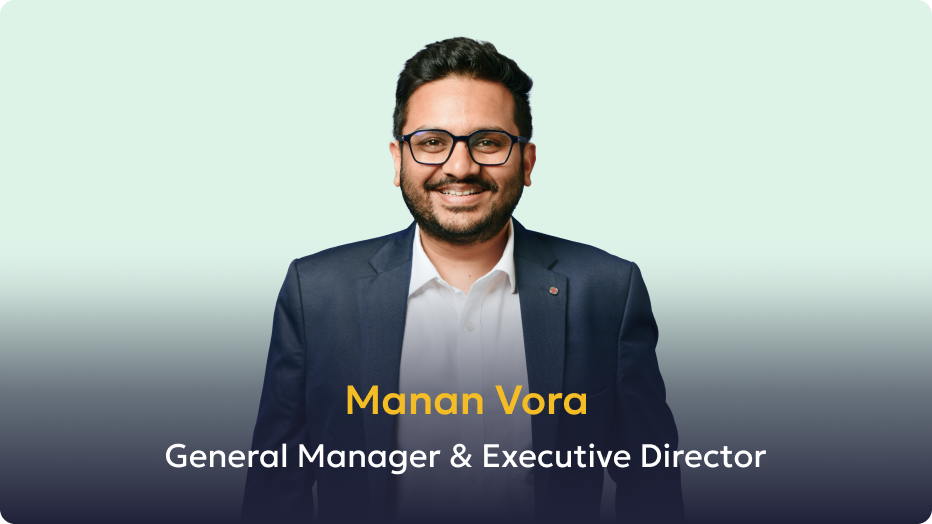
When I relocated to Dubai around eighteen months ago, I entered a financial ecosystem that was not merely experimenting with digital assets, it was attempting to institutionalise them. Over the last five years at Liminal Group, I have witnessed cycles of market enthusiasm and correction across jurisdictions. The Gulf, however, feels different. The region is building infrastructure with the explicit intention of integrating blockchain-based finance into mainstream economic systems.
This evolution is happening against a complex geopolitical backdrop. Yet the consistency of regulatory intent and institutional participation suggests that the Middle East’s digital asset strategy is rooted in long-term economic diversification rather than short-term market cycles.
Regulation as Market Architecture
One of the defining characteristics of the Gulf’s crypto ecosystem is the deliberate role played by regulators. Frameworks introduced by authorities such as the Virtual Assets Regulatory Authority aim to create operational clarity for exchanges, custodians, token issuers, and infrastructure providers.
Our own regional expansion reflects this structural shift. The establishment of a Dubai office is not merely a corporate milestone; it is an indicator of a broader institutional appetite for secure, enterprise-grade wallet infrastructure and custody technology in the region.
These regulatory developments have created an environment where technology providers can design solutions with clearer assumptions around capital controls, auditability, and cross-border asset flows.
Banking Engagement: Measured but Meaningful
While crypto-native adoption often dominates headlines, the more consequential shift in the Gulf is happening within traditional financial institutions. Banks in the region are cautiously exploring tokenised payments, blockchain settlement systems, and stablecoin rails.
Recent collaborations highlight how legacy banking networks are attempting to compress settlement timelines and improve liquidity visibility. Partnerships enabling near-instant cross-border retail payments across multiple currencies demonstrate the scale of transformation underway, particularly as global cross-border flows are projected to exceed $250 trillion within the next few years.
At a global level, major financial networks are also responding to the rise of stablecoins by experimenting with blockchain-based transaction validation and tokenised asset settlement. These initiatives signal that distributed ledger technology is increasingly viewed as a complementary layer rather than a disruptive outlier.
The implication for custody infrastructure is significant. Institutions are not simply seeking access to digital assets, they are evaluating how programmable money can coexist with existing treasury, compliance, and reporting systems.
Stablecoins and the Reinvention of Cross-Border Finance
Stablecoins are rapidly emerging as a key institutional entry point into digital assets in trade-intensive regions such as the Middle East. Their growing use in payment corridors is beginning to improve settlement speed, liquidity visibility, and operational efficiency in cross-border transactions.
Policy discussions around an AED-pegged stablecoin, alongside cross-border digital currency pilots such as the mBridge initiative involving the Central Bank of the United Arab Emirates and the Bank for International Settlements, signal a broader push towards interoperable and programmable financial infrastructure.
For enterprises, this shift is increasing demand for custody and wallet systems that enable real-time compliance, programmable payments, and structured asset governance across jurisdictions.
Custody as a Trust Layer
During earlier phases of the crypto market, custody was often perceived as a technical necessity. Today, advanced custody architecture is emerging as the foundational trust layer for institutional participation.
The growth of stablecoin usage, tokenised treasury operations, and DeFi integrations is increasing the complexity of digital asset lifecycle management. Custodians are therefore evolving from passive storage providers into active infrastructure partners.
Our collaboration with risk-intelligence platforms to embed real-time anomaly detection and transaction screening directly into custody workflows reflects this shift. The goal is to enable institutions to intercept high-risk transfers before settlement rather than merely auditing them post-facto.
This transition from static vaults to policy-driven transaction engines is central to the maturation of digital finance.
Market Signals from Institutional Adoption
The Gulf’s digital asset narrative is also being shaped by large-scale ecosystem participation. Surveys consistently indicate that financial institutions are prioritising blockchain adoption to achieve faster settlement cycles, improved liquidity management, and greater transparency in cross-border payments.
At the same time, the UAE’s comparatively high levels of crypto ownership, estimated at over a quarter of the population, create a unique convergence between retail familiarity and institutional ambition.
Events, expos, and policy forums across the region increasingly reflect this convergence. Conversations are no longer centred on speculative price movements but on tokenisation standards, custody governance, digital identity frameworks, and regulatory interoperability.
This shift is subtle yet consequential. It indicates that the region is transitioning from market participation to market design.
Digital Infrastructure and the Enterprise Opportunity
Another important dimension of the Gulf’s evolution is the integration of blockchain technology into broader digital infrastructure strategies.
Governments are positioning distributed ledgers alongside cloud computing, AI, and fintech innovation as foundational enablers of economic diversification. This has created opportunities for infrastructure providers to support enterprise-grade use cases ranging from tokenised trade finance to automated treasury reconciliation.
Projects such as Liminal’s Gain initiative, focused on enabling institutional participants to optimize asset deployment and operational visibility, are aligned with this direction. While still evolving, such frameworks reflect a growing demand for custody platforms that can facilitate capital efficiency without compromising governance.
In practical terms, enterprises entering the region are increasingly asking:
- How can digital asset workflows align with internal risk policies?
- What safeguards exist for multi-jurisdiction settlement?
- How can programmable payments improve treasury operations?
- Which custody models ensure continuity during market stress?
These questions highlight the maturation of demand.
Continuity Amid Geopolitical Uncertainty
The current geopolitical climate inevitably introduces caution into financial markets. Yet one of the more striking observations during my time in the Gulf has been the resilience of long-term digital economy agendas.
Investment in regulatory frameworks, innovation hubs, and institutional partnerships has continued even during periods of macro volatility. This persistence reflects a recognition that financial infrastructure development is measured in decades rather than quarters.
For digital asset providers, this reinforces the importance of designing systems that remain robust across market cycles, prioritising governance, interoperability, and operational discipline over opportunistic expansion.
Looking Ahead
As Liminal Group marks five years of building wallet and custody infrastructure, the Middle East represents both a proving ground and a strategic growth frontier.
The convergence of regulatory clarity, banking engagement, stablecoin experimentation, and enterprise adoption suggests that the Gulf is moving steadily towards a more integrated digital financial architecture.
Progress will not be linear. Market sentiment, geopolitical dynamics, and technological risks will continue to influence adoption trajectories. Yet the underlying commitment to building credible financial rails for the tokenised economy remains evident.
Disclaimer: First Answer Custody FZE (“Chainberg”) is currently undergoing the licensing application process with the Dubai Virtual Assets Regulatory Authority (VARA). We are not currently licensed or regulated. Chainberg does not currently offer regulated Virtual Asset custody services, and any future services remain strictly subject to final regulatory approval.
Read More

$100 Billion Later
Five years ago, I started
Liminal because of a simple
but frustrating observation…
The Infrastructure Moment
Five years into building Liminal Custody, what stands out is not just the pace of growth in…
The Verifiable Future
Digital asset security is not collapsing under visible pressure. Instead, it is deteriorating…